AI in commissioning uses machine learning and language models to read commissioning records, review evidence, score risk, and forecast completion. It does not execute tests and it does not sign anything off. The work stays human. What changes is how much of the record a team can actually read, and how early they can see trouble.
That definition matters, because the term is starting to mean everything and nothing. Checklist generators, chatbots, document extractors and forecasting engines are all being sold under the same label. They are not the same thing, and they do not carry the same risk. This piece is a field guide: what the technology genuinely does well today, and the five things it cannot do for you.
Why commissioning is suddenly an AI problem
A hyperscale data center program produces more evidence than any team can read. Tens of thousands of checklist line items. Functional test results across thousands of pieces of equipment. Issue logs that run to thousands of entries. Fifty to a hundred documents per equipment item: submittals, factory tests, calibration certificates, field reports, signatures.
Almost all of it is written down. Almost none of it is read twice.
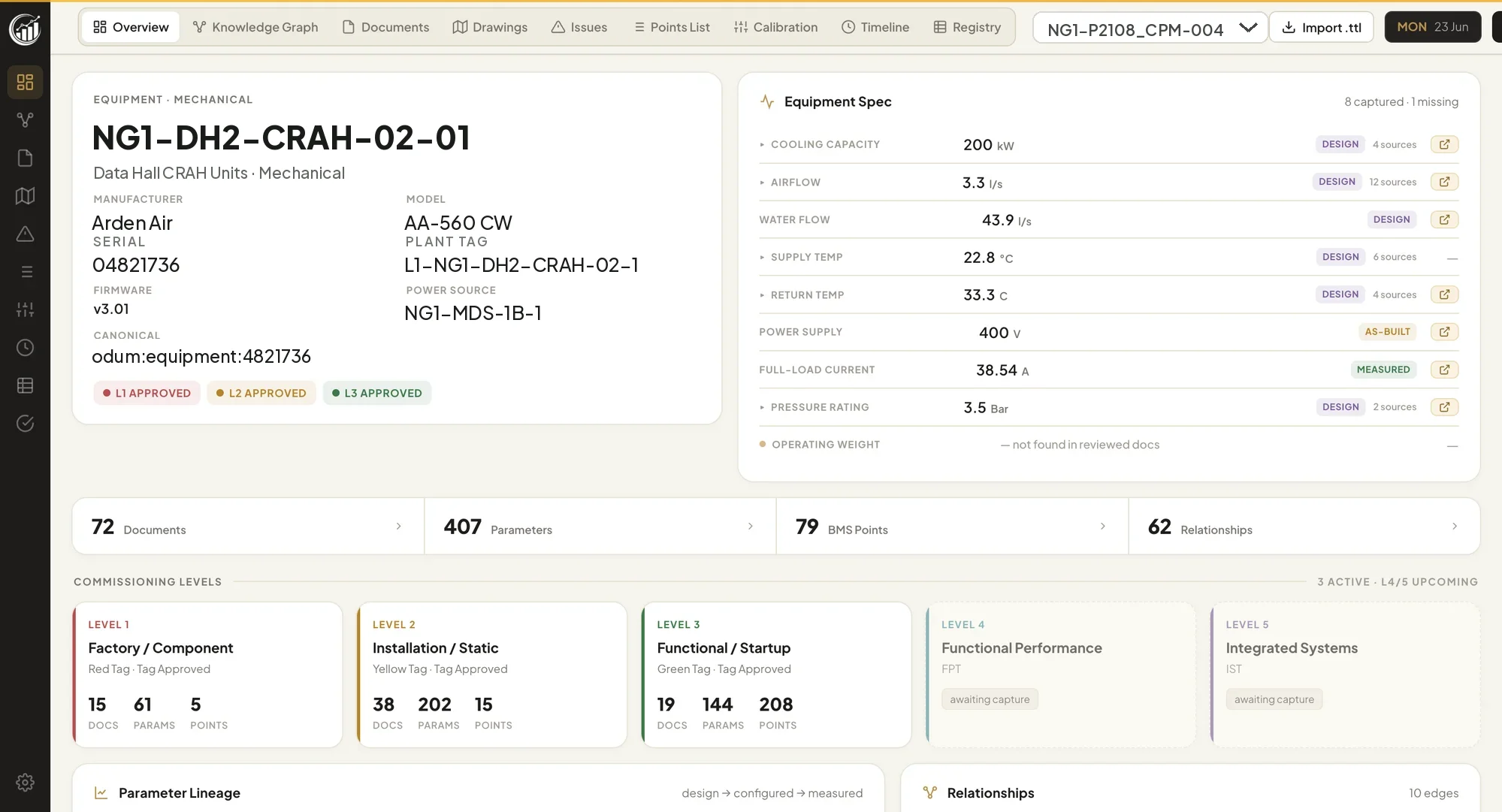

Fig. 1 shows the reading load for a single CRAH unit: 72 documents, 407 parameters, 79 BMS points. Nothing on that screen was typed in. Every value was extracted from the reviewed documents and linked to the equipment, down to the operating weight flagged as not found in any of them.
That gap is where integrated systems testing surprises come from. The signal was usually in the record: a quiet issue that never closed, a calibration cert that expired, a test witnessed but never evidenced. Nobody hid it. Nobody had time to find it. Reading everything, every day, is not a human-scale job. It is exactly the kind of job machines are good at.
The pain this actually removes
Fifty to a hundred documents per equipment item. Automated review finds the expired calibration cert and the missing signature weeks earlier, while there is still time to fix them quietly instead of explaining them loudly.
Thousands of entries, and the one that bites at go-live is the one that went quiet. Machines read every entry, every day, and rank what deserves attention now instead of leaving triage to whoever shouts loudest.
A schedule is an opinion with a Gantt bar. A calibrated forecast is a date with a stated probability, checked against completed projects, that a delivery lead can put in front of a customer and stand behind.
Ask what the next milestone actually depends on and the answer lives in five spreadsheets, two inboxes and one engineer's memory. A connected record answers in seconds, with the sources shown.
What AI can do today
One thing to hold onto through this list. The risk scores and forecasts below do not come from a general-purpose language model asked for an opinion. They run on ODUM’s own machine-learning models, trained on closed commissioning records and back-tested on completed programs; frontier language models are used where language itself is the job, reading documents and site conversations. An AI commissioning platform earns trust with the first kind of model, and only borrows fluency from the second.
1. AI document review: read and classify the document trail
Models can classify commissioning documents by type, check that signatures and stamps are present, trace calibration certificates to the instruments that used them, and flag what is missing from an evidence package before turnover instead of after. The same reading now extends to the sheets themselves: AI drawing review identifies a drawing, walks its revision chain, and links every tagged element to the register it should match. A review that took a document controller a late night per equipment item becomes minutes, with findings a human then judges.
The cost of doing this by hand is documented. Industry analysis puts first-pass submittal rejection at roughly 35 percent, at around $805 per rejection and two to four weeks of delay each; across a 500-submittal project that is on the order of $140,000 of preventable rework, and complex projects can exceed 3,000 documents needing review before equipment ships. Machine reading does not shave a margin off that work. It changes its unit, from evenings to minutes.
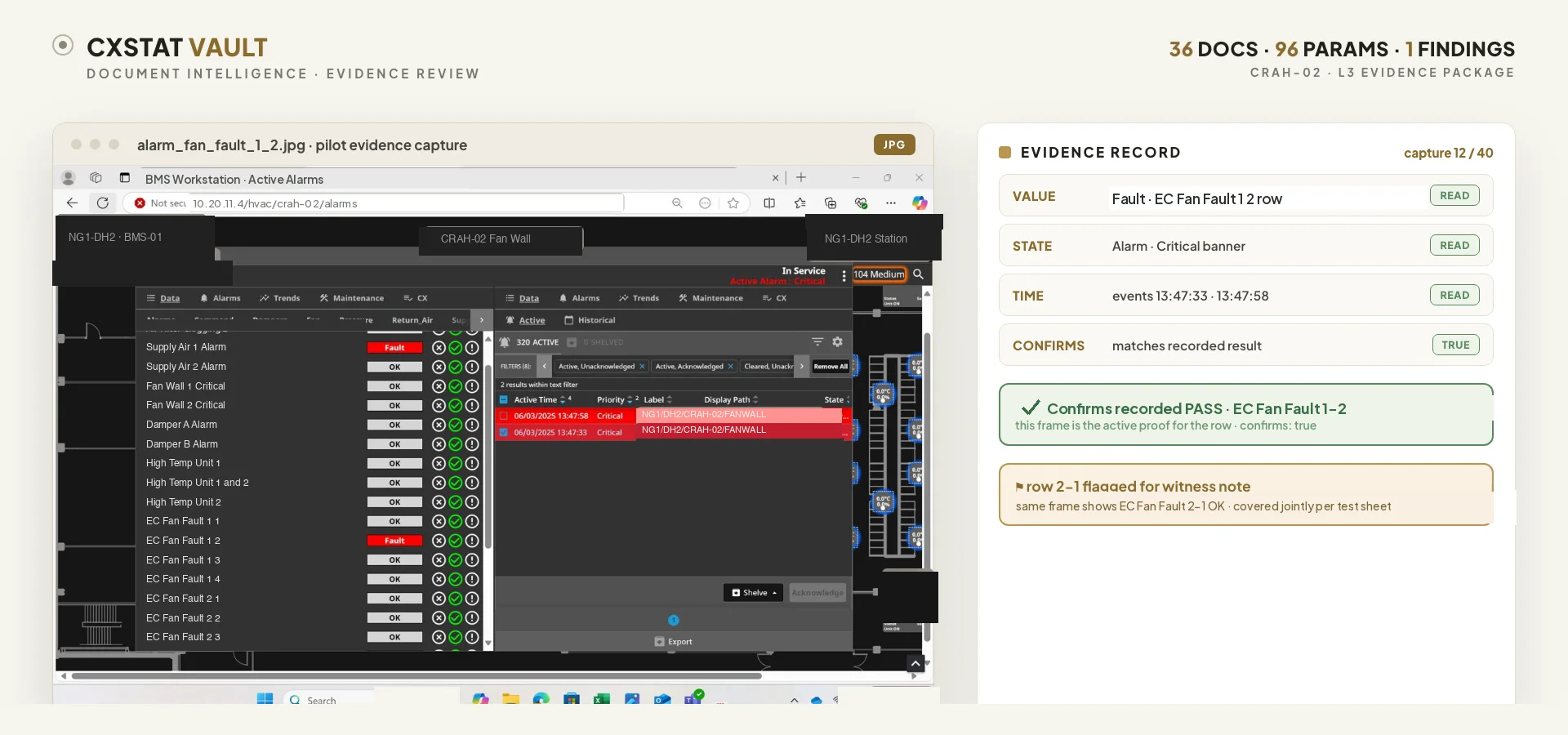
In Fig. 2, Vault reads a calibration certificate as it lands in the document trail. On the left is the certificate as submitted. On the right is what the machine made of it: classified by type, matched to the instrument and the equipment it belongs to, dates and result extracted, and the certificate checked against the test chronology, with one legibility flag left for a person to judge. Classification, extraction and the checks, in one pass, and the document lands linked in the evidence package instead of loose in a folder.
2. Find the risk hiding in the issue log
An issue log with three thousand entries is unreadable by people and trivially readable by machines. AI can score which open issues are likely to still be open at go-live, detect duplicates, recall how similar issues were solved on past projects, and notice the most dangerous signal of all: the critical issue nobody has touched in three weeks. Silence is a signal.
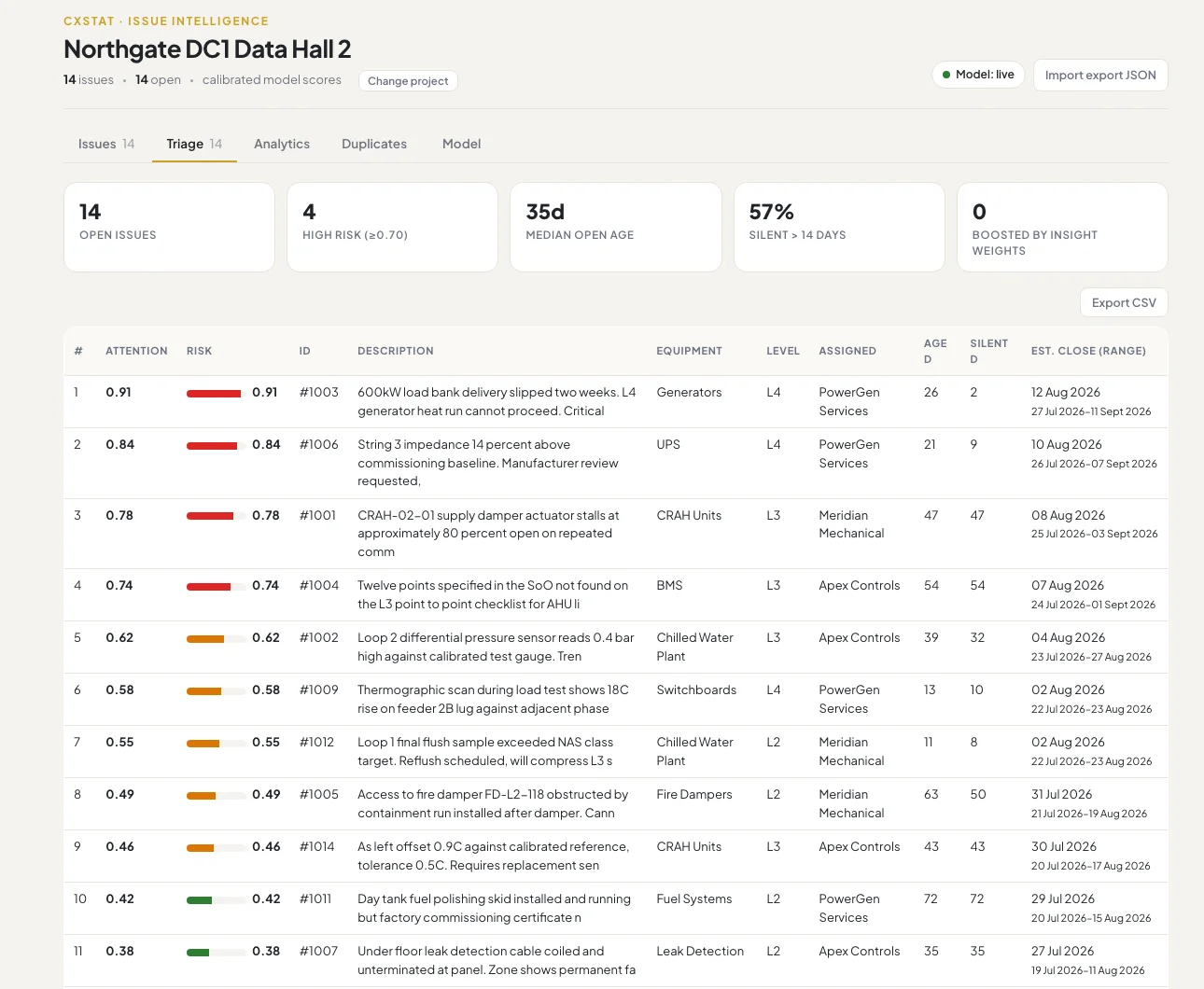
Fig. 3 shows the moment an issue enters the log. The model scores it against the calibrated risk model and attaches an estimated close window, recalls the most similar closed issues from past programs along with how they were actually resolved, and proposes a starting point for the fix drawn from those closures. Triage starts informed instead of starting from a blank comment thread, and a person still decides what the fix is and when the issue is closed.
Training this model on more than 130,000 closed issues from real commissioning programs taught us things we did not expect. The single strongest signal is what the description says, not the priority label a human attached. A category's own history carries real weight: the kinds of issues that closed slowly on past projects keep closing slowly on new ones. And silence is not neutral. An open issue that has stopped receiving comments is a materially worse bet than a noisy one, which is the opposite of how issue logs get read by eye.
3. Forecast finish dates with measured confidence
This is the least understood capability and the one with the highest bar. A useful AI forecast is not a prediction, it is a calibrated commitment: a date with a stated probability, where the stated probability has been checked against reality. If a system says p90 and its p90 dates hold roughly nine times out of ten on completed projects, you can commit to a customer with it. If a vendor cannot show you that back-testing, the forecast is a guess with a decimal point.
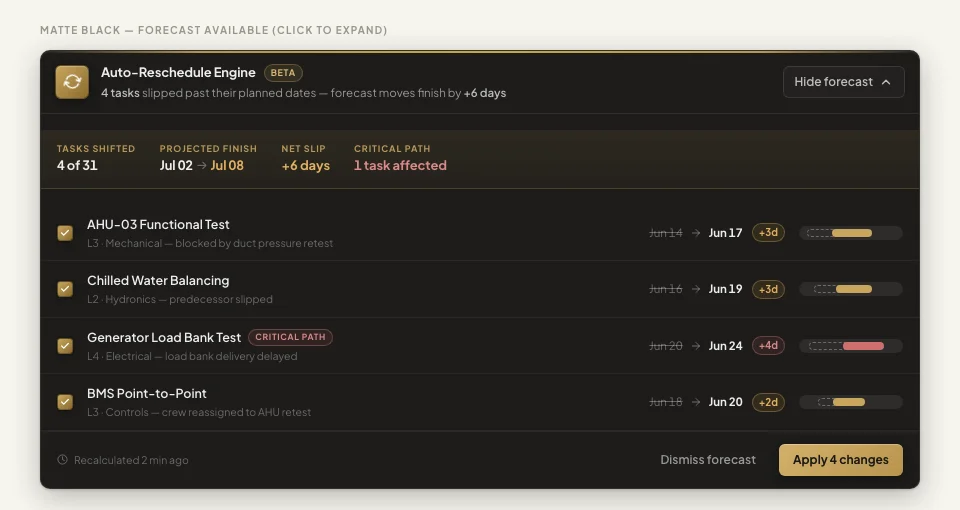
In Fig. 4, four slipped tasks move the projected finish by six days. The engine shows the critical path impact and proposes the reschedule. A human reviews it and applies it.
One distinction matters here. These forecasts do not come from a general-purpose language model asked to guess a date. Schedule Intelligence runs on a proprietary model trained on completed commissioning programs and validated by replay: give it a finished project it has never seen, let it forecast, and measure whether its stated confidence held. A language model produces a plausible sentence. A calibrated model earns a number.
4. Turn field conversations into records
The real state of a project lives in site chats and photos. AI can read those conversations and turn "scaffold access blocked on L3 again" into a tracked issue with evidence attached, without asking field teams to change how they work. Capture stops depending on whether someone had time to fill in a form.
This is not a niche habit to work around. WhatsApp passed three billion users in 2025, and on construction sites it is effectively the default coordination channel: one European industry survey found 72 percent of construction stakeholders use WhatsApp for internal project coordination. Job sites run on it because everyone already has it and it works in a dusty glove. The mistake is trying to replace it. The better pattern is treating the chat as the input layer and letting the system of record read it.
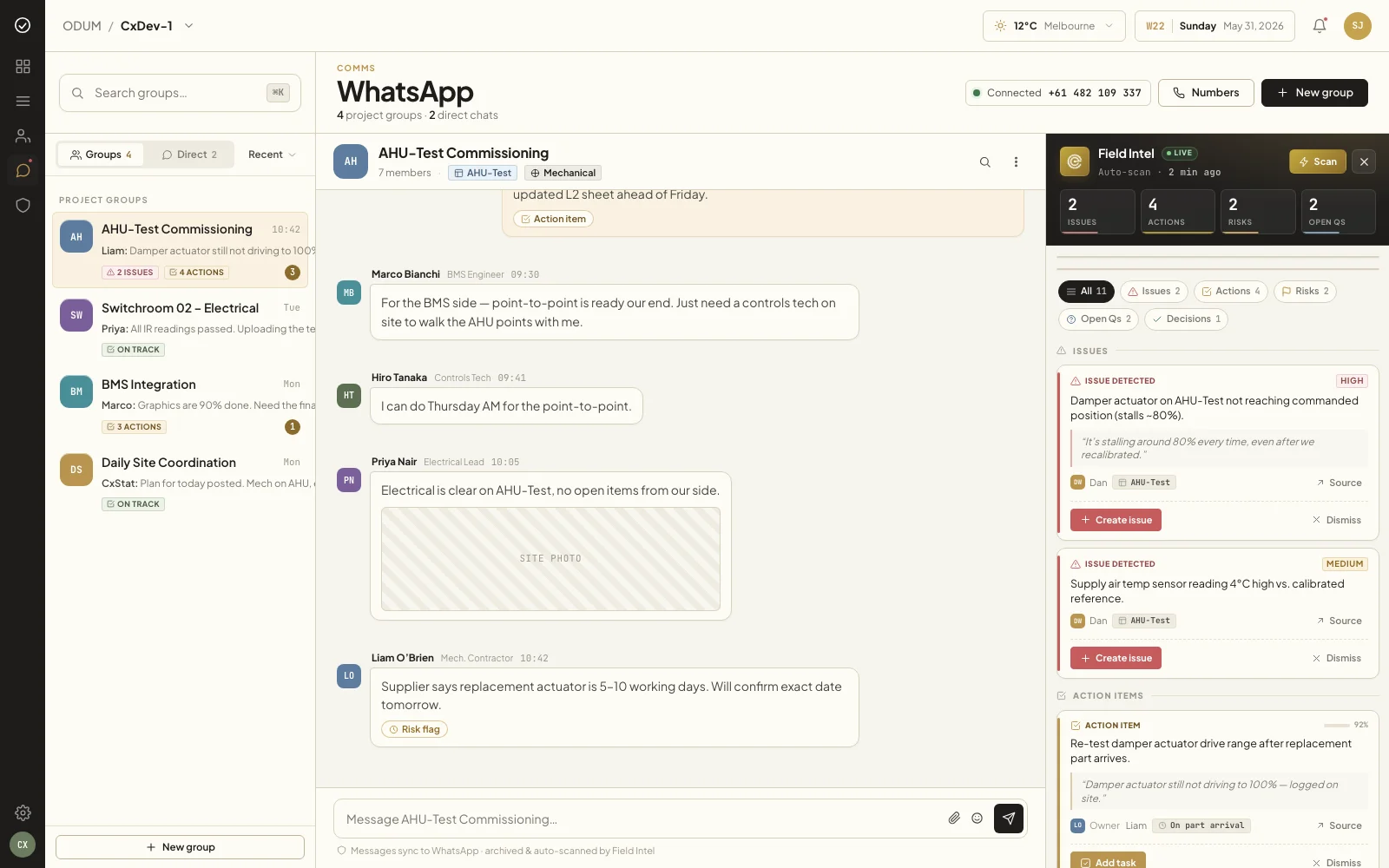
Fig. 5 shows the result: two issues detected with the exact quote as evidence, action items with owners, and every card linking back to its source message. Nobody filled in a form.
5. Answer questions with citations
Instead of asking an engineer to pull a report, a commissioning manager can ask the record directly: which air handlers are blocked for L4, what changed this week, where is the test evidence for this switchboard. The answers only deserve trust when they come grounded, with source documents cited, so a human can check every claim.
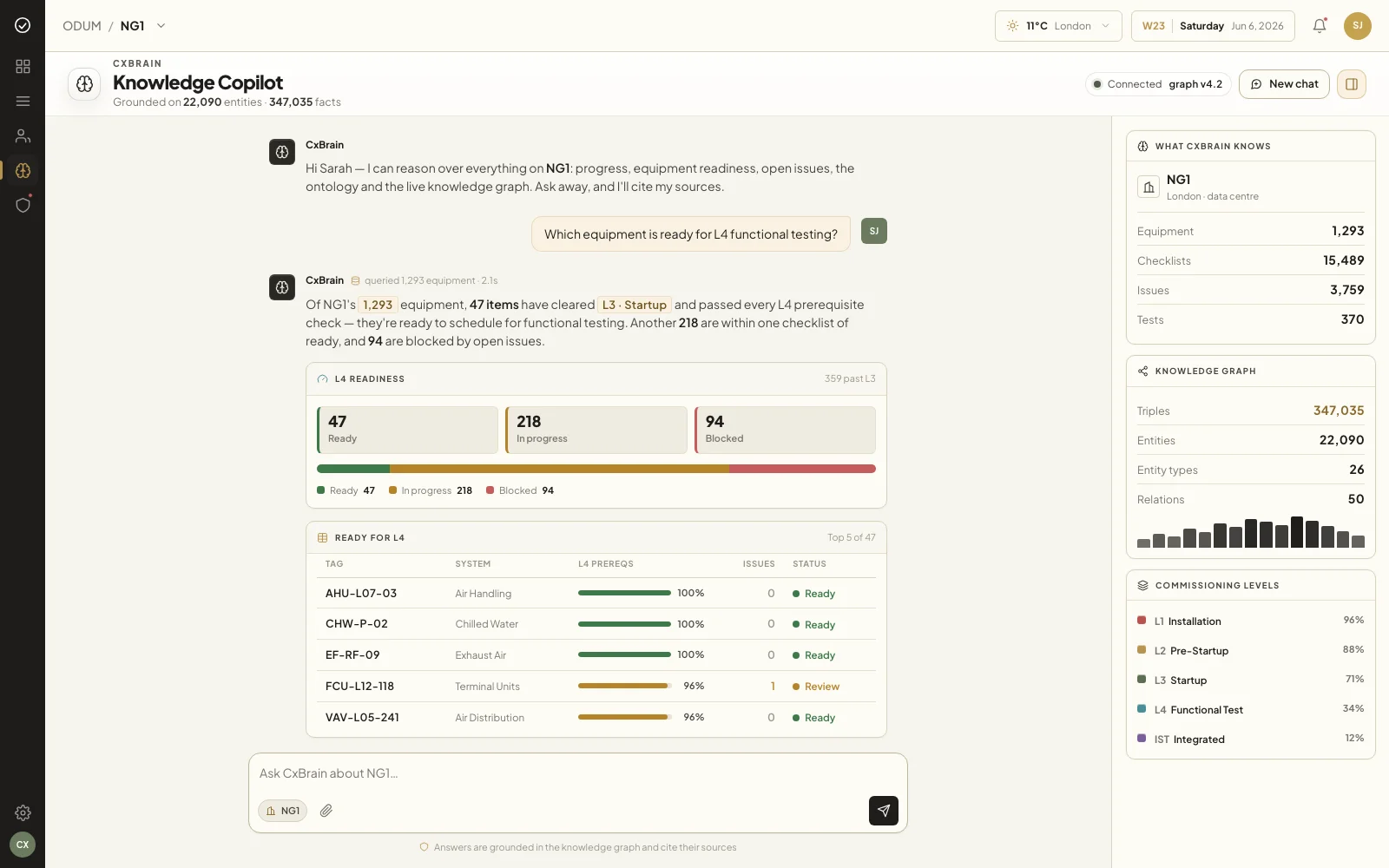
In Fig. 6, CxBrain is asked which equipment is ready for L4 functional testing. It queries 1,293 equipment items against the knowledge graph and answers with the counts, the blockers, and its sources.
What AI cannot do
Five limits, and they are structural, not temporary. The next model release does not change them.
A model knows what the record says, not what is on site. If the reading was never captured, the photo never taken, the test never evidenced, AI has nothing. Its ceiling is the quality of capture.
A functional test is a physical event. Someone qualified watches the pump start, the breaker trip, the generator take load. No software witnesses anything.
Deciding whether an energization is safe to proceed is engineering judgement held by accountable people. AI can surface every relevant fact. It cannot own the decision.
A commissioning authority signs because their name stands behind the signature. A model has neither. Every signoff should look exactly like it did before: a human name, informed better.
AI applied to fragmented, untyped, spreadsheet-scattered data produces confident nonsense faster. Structure comes first, intelligence second. This is why the intelligence layer has to sit on a typed record, not a folder of PDFs.
Four questions to ask any vendor
If a platform says it does AI-powered commissioning, four questions separate substance from decoration.
Do answers cite the project record, so every claim can be checked against a source a person can open?
Can they show back-tested coverage on real completed projects, not a demo? A p90 that holds nine times out of ten is a commitment; anything else is a guess with a decimal point.
Intelligence that requires ripping out your system of record is a migration project with a chatbot attached. The real test is AI-native versus bolted-on: a platform built around the reading, or a form tool with a model stapled on.
Who witnesses, who approves and who signs should look exactly the same with the AI as without it. If the product blurs that chain, walk away.
This is the standard we hold ourselves to at ODUM AI. CxSTAT reads the commissioning record, including from incumbent tools, reviews the evidence, scores readiness and forecasts completion with calibration we back-test on completed projects. Every answer is cited, and every signature stays human.
Frequently asked questions
What is AI-powered commissioning?
The use of AI to read commissioning records, review document evidence, score issue and equipment risk, and forecast completion dates. Execution, witnessing and signoff remain human responsibilities.
Will AI replace commissioning authorities?
No. AI changes how much of the record a commissioning authority can see, not who holds authority. Witnessing and signoff are human because responsibility is human.
Can AI review commissioning documents?
Yes. Classification, completeness checks, signature and stamp detection, and calibration traceability are reliable today. Findings still need human judgement on what is acceptable.
Should I trust an AI-predicted finish date?
Only if it is calibrated: the vendor should show that dates at a stated confidence level actually held at that rate on completed projects. Ask for the back-testing.
Does AI-powered commissioning require replacing existing tools?
No. The better pattern is an intelligence layer that reads the commissioning record where it already lives.
Submittal rejection rates, cost per rejection and document volumes: BuildSync industry analysis of construction document workflows, 2026.
WhatsApp usage in construction coordination: BauInfoConsult survey of construction stakeholders, as reported 2026. WhatsApp user base: Meta, 2025.
Issue model training corpus, document and parameter counts, and platform screens: ODUM AI internal data, shown with anonymised or fictional project identifiers.