Commissioning has always answered one question. Will this facility work when we turn it on? What has changed, across four decades, is how much we ask of that question, how complex the facilities behind it have become, and what we are able to measure on the way to answering it. The evolution of commissioning is, at heart, the evolution of what we can see. Fig. 1 traces that arc: visibility climbs steadily until activity tracking, where measurement plateaus, and the eras beyond lift it from recording the past to foreseeing what happens next.

Fig. 1. How much readiness each era of commissioning can see and foresee. Illustrative.
Commissioning began outside the data center
Commissioning did not begin in the data center. It emerged from conventional buildings, where the goal was simple: confirm that what had been designed was installed correctly and performed as intended.
An engineer would start a pump, stroke a damper, trip a breaker or verify that a control loop held its setpoint. Each result was recorded, signed off and filed away. The process was manual, methodical and focused on individual pieces of equipment. The question it answered was straightforward: does this piece of equipment perform to specification?
As projects became larger and more complex, the industry formalised the process. ASHRAE's Guideline 0 established commissioning as a quality-focused practice that spans the entire project lifecycle rather than a final inspection before handover. Organisations such as the Building Commissioning Association helped standardise the discipline, giving it a common language and consistent methodology.
For most buildings, that approach worked well. Buildings behaved largely as the sum of their individual systems. If every major component performed as expected, there was every reason to believe the building would too.
That assumption held for decades. Then the data center changed the question.
The data center raised the stakes
A data center is designed around one principle: it cannot stop. Availability is the product. Everything else exists to protect it.
Power is backed by multiple utility feeds, generators, uninterruptible power supplies, automatic transfer switches and redundant distribution paths. Cooling systems are duplicated. Critical equipment is designed so that the failure of one component should never interrupt the load.
This philosophy is reflected in frameworks such as the Uptime Institute Tier Classification System, where facilities progress from basic single-path infrastructure to concurrently maintainable and ultimately fault-tolerant designs.
That fundamentally changed what commissioning had to prove. It was no longer enough to demonstrate that a generator started or that a UPS carried its load. The real question became whether the entire facility continued operating when something failed. Would power transfer within the ride-through window? Would cooling recover without interruption? Would every dependent system respond exactly as intended under real failure conditions?
The most important behaviour was no longer found during normal operation. It appeared during failure.
The original commissioning model, verifying equipment one component at a time, could no longer answer that question. The industry needed a way to prove not just that individual systems worked, but that the entire facility behaved correctly when its resilience was put to the test. Fig. 2 shows how far that claim stretches: from the part, to the system, to the facility, and to the program and people who prove it.

Fig. 2. Every level proves a bigger promise than the one below.
Structure became the answer: the data center commissioning levels
The industry's response was structure. Instead of treating commissioning as a collection of independent tests, it became a staged process where each level expanded what was being proven, from individual equipment in the factory to the entire facility operating under simulated failure. While the numbering varies between commissioning providers, the progression remains remarkably consistent across the industry.
Design and documentation review
Before anything is built, the commissioning intent, specifications, and test plans are set. Not always numbered, but increasingly treated as the foundation.
Factory acceptance testing
Equipment and prefabricated modules are witnessed and tested at the manufacturer, before they ever reach site.
Delivery and installation verification
What arrived matches what was specified and is installed correctly, in the right place, ready to energise.
Pre-functional and component start-up
Each system is energised and started safely on its own and checked against its individual performance criteria.
Functional performance testing
Each system is exercised through its full sequence of operation and proven to perform as designed.
Integrated systems testing
Everything is proven together, including how the facility responds when systems fail and load transfers between paths. The real test of readiness.
Operational handover and sustained running
Handover to the operations team and the first period of live load. A facility is not truly commissioned until operations can hold it.
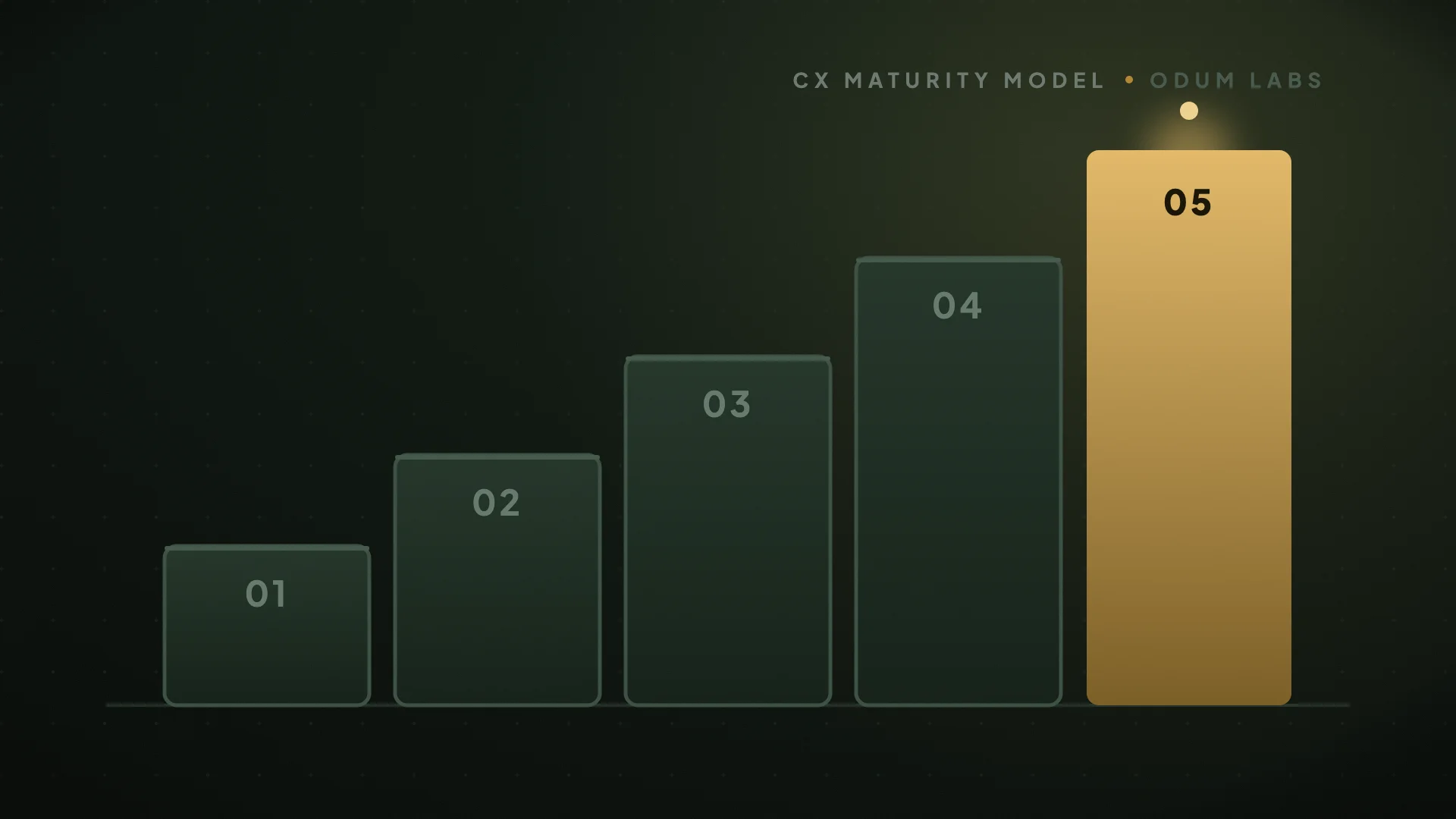
The coloured levels illustrate more than a sequence of tests. They represent the evolution of confidence. Each stage builds on the one before it, widening the scope of verification from individual components to complete systems and, ultimately, to the facility as a whole.
Commissioning had become a ladder. Each rung increased confidence, but none could replace the one above it. The real measure of readiness would always be found at the top.
Integrated systems testing became the proof of readiness
The final stage of commissioning is where the discipline earns its reputation. Integrated Systems Testing (IST), often called a black building or pull-the-plug test, deliberately removes utility power and observes how the entire facility responds. Generators start, transfer switches operate, UPS systems bridge the interruption, cooling recovers, and the critical load remains uninterrupted throughout the event.
Because live IT equipment cannot be placed at risk, engineers use artificial load banks to simulate the servers while deliberately introducing failure after failure. The objective is not to prove that individual systems work. It is to prove that the facility continues to work when individual systems don't.
Fig. 3. The black building test, from utility loss to cooling recovery. Illustrative.
This is where the distinction between activity and readiness becomes real. Every lower commissioning level can be complete. Every procedure can be signed off. Every component can show green. Yet the integrated test can still expose a sequence, like the one in Fig. 3, that fails to hold under real operating conditions.
A facility is not ready because every test has been completed. It is ready because the entire facility continues to operate exactly as designed when something unexpected happens. Integrated Systems Testing became the industry's recognition that completed activity is not the same as demonstrated readiness.
But proving readiness across thousands of assets, tens of thousands of tests and countless dependencies created a different challenge. Not proving readiness. Managing the evidence behind it.
Tooling moved from binders to platforms
As projects grew, so did the volume of commissioning data. Paper binders gave way to spreadsheets. Spreadsheets gave way to dedicated commissioning management platforms. Test scripts, equipment registers, issues, approvals and documentation that once lived across folders, emails and disconnected files became organised into structured digital records.
For the first time, commissioning programs could be managed at scale. Thousands of assets and tens of thousands of checks could be tracked from a single platform, giving teams a level of visibility that had never been possible before.
It was a major step forward, and it remains the foundation of most well-run commissioning programs today. But these platforms were designed to solve one problem: managing activity.
They could tell you what had been completed, what remained open and where every issue sat within the program. They became exceptionally good at recording the work that had already happened.
What they could not reliably answer was the question every project eventually asks before the next major milestone: are we actually ready?
That answer depends on far more than completed checklists. It depends on dependencies, critical paths, unresolved risks and the relationships between thousands of commissioning activities, relationships that traditional dashboards were never designed to understand.
In solving the industry's activity problem, commissioning platforms quietly exposed its next limitation. For years, that limitation remained manageable because programs had enough time to recover from surprises. Then the schedules changed.
Hyperscale changed the tempo
Commissioning didn't change in isolation. The market changed first. Enterprise server rooms gave way to large colocation facilities, which quickly evolved into hyperscale campuses. The challenge was no longer building a single data center. It was delivering capacity repeatedly, predictably and at unprecedented speed.
That changed how facilities were built. Entire electrical and mechanical assemblies began arriving on site as prefabricated modules, shifting more commissioning effort back into the factory. Factory Acceptance Testing became more critical because every issue found before shipment was an issue that didn't delay the construction schedule.
At the same time, schedules became dramatically shorter. More facilities were delivered in parallel, milestones moved closer together, and the demand for experienced commissioning engineers grew faster than the available workforce.
For years, commissioning platforms helped teams keep pace by providing visibility into activity. That was enough when programs had time to recover from surprises. Hyperscale quietly removed that margin. And just as schedules reached their limit, the industry's next challenge arrived.
AI infrastructure became the next forcing function
Every major step in the evolution of commissioning has been driven by the same thing: the cost of getting it wrong. AI infrastructure has raised that cost again.
Racks move from a handful of kilowatts toward many tens, straining power distribution and outpacing air cooling.
Direct-to-chip loops, rear-door exchangers and coolant distribution units add a new commissioning scope. Flushing, leak testing, flow and temperature control.
Systems are more electrically interdependent and more software-defined, so integration points multiply and test sequences lengthen.
Larger, power-constrained campuses on shorter schedules leave almost no slack to absorb a surprise found at the integrated test.
The most obvious change is density. Racks that once consumed only a few kilowatts now routinely demand many tens of kilowatts, with the highest-density AI deployments pushing far beyond that. Air cooling alone is no longer sufficient, bringing liquid cooling into mainstream data center design.
That introduces an entirely new commissioning scope. Direct-to-chip cooling, rear-door heat exchangers and coolant distribution units all require flushing, leak testing, flow balancing, temperature verification and integration with existing electrical and mechanical systems. These are commissioning activities that simply didn't exist when today's commissioning processes were developed.
At the same time, facilities have become more software-defined, more electrically interconnected and increasingly constrained by available power. Every new dependency extends the commissioning sequence, while compressed delivery schedules leave little opportunity to recover if something goes wrong.
The consequence is clear. Modern facilities are asking activity-based commissioning processes to manage a level of complexity they were never designed to understand.
The industry reached an activity plateau
Looking back, a clear pattern emerges. Traditional commissioning proved that individual equipment worked. Structured commissioning proved that complete systems worked. Integrated Systems Testing proved that the entire facility worked under failure. Digital platforms proved that commissioning activity could be managed at scale.
But somewhere along that journey, measurement stopped evolving. The industry became exceptionally good at recording what had already happened. It made far less progress in understanding what was likely to happen next.
That isn't a failure of commissioning. It is simply the point where the current generation of tools reaches its natural limit. Every experienced commissioning manager has seen it. The dashboard says the project is ready. The integrated test says otherwise.
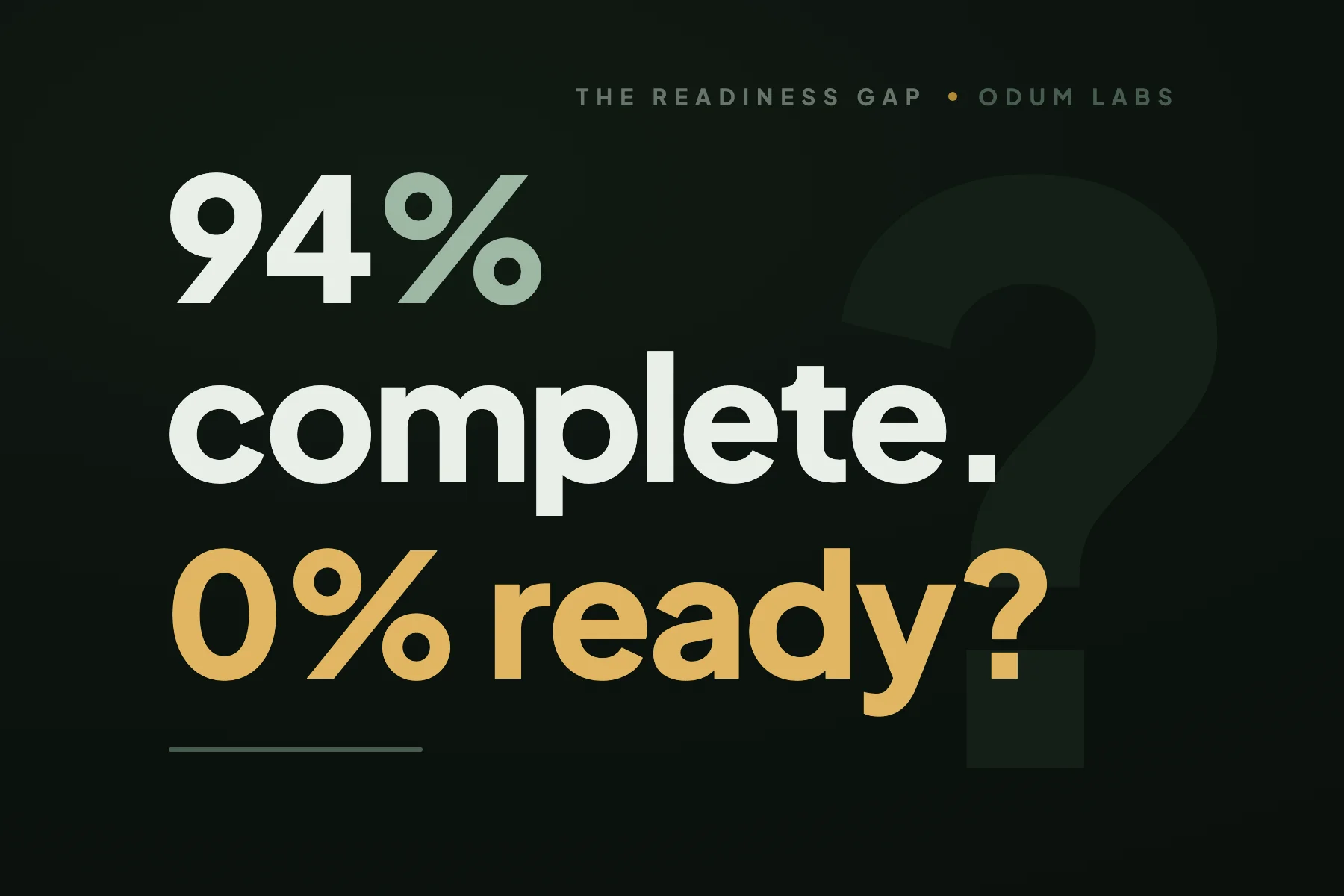
That difference is the Readiness Gap. Fig. 4 shows why it is so dangerous: confidence is highest exactly where readiness is least proven, just before the event.
Fig. 4. The gap between reported progress and actual readiness. Illustrative, not measured data.
The next evolution, from tracking activity to measuring readiness
The next chapter in commissioning is not another testing level, nor another dashboard. It is a change in what we measure. For decades, commissioning has measured completed work. The next evolution measures confidence.
Readiness is not the number of completed checklists. It is the probability that the next milestone, whether a functional test, an integrated test or an energisation, will succeed, given the actual state of every dependency that supports it.
That requires a different way of thinking. First, commissioning platforms made activity visible. The next generation makes dependencies visible. From there, Readiness Intelligence can reason over those dependencies, identify hidden risks and estimate the likelihood of success before the next critical event takes place.
The final step is orchestration, where software doesn't simply report readiness but continuously coordinates the work needed to improve it, leaving engineers to focus on decisions rather than administration.
We call that discipline Commissioning Readiness Intelligence. It is not a replacement for commissioning. It is the next stage in its evolution.
The history of commissioning has always been about expanding what engineers can know before they commit a facility to operation. The next evolution expands what they can predict.
Frequently asked questions
What did commissioning originally prove?
That individual pieces of equipment were installed correctly and performed to specification. An engineer would start a pump, trip a breaker or verify a control loop, then record and sign off each result. Buildings behaved largely as the sum of their systems, so component-level proof was enough.
Why did data centers change what commissioning has to prove?
Because a data center is designed around availability, the real question became whether the whole facility keeps operating when something fails. That demand drove the staged commissioning levels and Integrated Systems Testing, which deliberately removes utility power to prove the facility under failure.
What is the Readiness Gap?
The difference between reported progress and actual readiness. Every checklist can be complete and every dashboard green, yet the integrated test can still expose a sequence that fails under real operating conditions. Activity data alone cannot show that gap.
What comes after activity tracking in commissioning?
A shift in what is measured: from completed work to readiness, the probability that the next milestone succeeds given the actual state of every dependency behind it. We call that discipline Commissioning Readiness Intelligence, with orchestration as the step beyond it.
Uptime Institute, Tier Classification System, Tier I to Tier IV. uptimeinstitute.com/tiers